Your "controversy" means nothing.
Not just because I don't care. Not just because we're going to waste the next half an hour -- with you bowdlerizing John Stuart Mill, and me intentionally misquoting Emerson or somebody because you haven't read him and are powerless to stop me -- but because this entire discussion is pointless. Don't care what we're talking about: philosophy, poetry, politics... it's all absolutely, truly, quite literally pointless. Because you're not going to say anything original, and if I do happen to arrive at something new and interesting you're just going to misinterpret it as the orthodox bull shit that you're expecting me to say. People have probably been arguing about whatever it is for centuries, and at least one of us is no Socrates. So why, then, are we arguing? Possibly because abstract discussions like this provide a convenient conduit for our mutual hatred, but I'm not going to bring that up because you'd probably think it was cheating.
Speaking of cheating:
I'd like to point out that I have no particular problem with it. Rhetoric -- whatever poor deluded Aristotle thought -- is all about cheating, but the type you're engaging in is generally considered bad form. First, saying a thing louder does not affect the structure or content of what you've just said. Nor does repeating it. (Hint: rearranging the dependent clauses and using some dressier synonyms to reiterate your original statement is still repeating yourself.)
This stuff happens though. I get it. We're human. In the heat of the moment I might call your mother a sodden pile of misfiring neurons, seemingly incapable of motility, coherent speech or self-awareness, or really of anything more advanced than reproducing increasingly warped replicas of herself. Or I might do it in cold blood later using a transparent evasion like this. Point is: I don't take it personally, I hope you don't either. What I do mind, very much, is that every time I attempt to prune your "thesis" down to a consistent and manageable size you expand on it and each conflation, factual error, or logical flaw sprouts a new dandelion, or two new heads --- whichever hackneyed metaphor you prefer, I'm trying to keep it on your register.
You have, in short, abandoned the ritual forms of debate, but let's just say that Nature did not equip you to be the brilliant, more-flaunting rebel you imagine yourself to be. In fact I seem to remember having this exact same argument, or riffs on it, with various members of your tribe. The tragedy of all this is that each time you open your mouth I will (foolishly) assume that you are making the most logical form of your argument and try skip to the part where I point out the underlying rift in our various worldviews, from which all our disagreements flow. Because if both our arguments are rational (an unfounded assumption, which I'm willing to make for the sake of the argument, and my continued sanity) the only way we can disagree is if our premises/logical priors are different. You, however, are dead set on attacking the limbs and outward flourishes, instead of recognizing that the vast majority of disagreements come about because our central beliefs about the nature of the universe are violently opposed. I don't see why. Is it maybe because none of us can handle being friends with someone who thinks we're wrong, and so we try to surround ourselves with people who think exactly the same things, in exactly the same ways and use exactly the same jargon and even speech patterns as we do? (Bonus points if they look like you too.)
Realistically, it's not as if I can expect you to change your mind, so the only way to get past this and get you to shut up is to make you look like a fool. Which is, I understand, frowned upon in polite company. We're assuming -- again, without a lot of basis in reality -- that we're actually in polite company. Let's pretend though, that for a moment clear-headed, non-egoistic rationality has made a rare incursion into the social sphere, and I can then explain to you why this isn't working:
First, your argument is probably based on a premise which you present as generally assumed by most right-thinking people, but on closer examination fails to line up with what people actually think or do. This is pretty much the definition of "contentious."
Secondly, even if a thing is generally assumed, an appeal to authority, or even consensus, is the worst possible way to win me over to your line of thinking (short of broiling me over a fire and forcing me to recant.) Even if most people agree with you, this is no guarantee that you're right. True, if there's reason to believe a thing, all else being equal, people will believe it. This seems reasonable to believe. However, this doesn't mean rule out false positives, doesn't preclude people jumping on a likely-looking bandwagon and it doesn't mean that all of everyone's reasons are based on evidence. If delusion in one area is the only way you can keep a little finger hooked around the rest of reality, then yes, it 'makes sense' to be delusional. Still, bayesian implication aside, if you have a majority, you've got might, which due to transitivity makes right.
Because of this, if you're unlucky enough to be in a minority you have to fight two battles. You have to make the case that there even is a debate and that you're not just being stupid, then you need to actually win the debate. As a result, if you're going to have heterodox views, you often have to know more than everyone else. By which I mean: if you're going to make the case that we should worship Baal, or that Wittgenstein was actually a time-travelling manifestation of a multi-dimensional entity who liked to troll humans, be my guest, but you're going to need to find a lot of evidence. ...and honestly, though the universe is both rich and strange, most things just don't seem interesting enough to devote your life to. Which both explains why most of us don't spend our careers becoming experts in cuneiform and also (sadly) why your average person has no interest in how their phone or gravity works.
At the same time I don't need to be a climatologist, an economist, or even all that clever to see that carbon credits have enormous potential for abuse. It's pretty obvious what with how a lot of people are greedy bastards. Naturally, the most sensible thing to do when you're a greedy bastard is to hijack other people's altruism and make yourself unassailable. Attacking carbon credits means you don't love the planet etc. This is obvious (to my mind) error, but for some reason people respond to that sort of thing.
Note that the argument I'm making here is not the same as the "I can imagine it happening so it probably has" line. No, in political science you have these sort of corruption attractors. The point is not that I know which companies or people are going to find ways to extract rents -- legally or illegally, ethically or unethically -- from a bad policy, but that someone eventually will. Because: history. It's more an ecological argument than a mechanistic one, and it's one with significant evidence behind it (philosophically, induction sucks, but it's kind of the best thing we've got.) On average, people are going to spot an opportunity for corruption and on average I'm going to being right. Plus, the average and the total effects are all that matter when you're discussing policy.
Speaking of which, it does not matter how short I am, I will find some way to knock you on your ass if you give me another anecdote. Anecdotes are absolutely *insert long string of profanity* useless. They help no one. They mean nothing. Don't tell me how you know someone who reacted badly to a medication. I don't want to hear how badly a tax "hike"/"reform" affected your uncle. It's not important what some professor of yours thought. Yes, they are part of the data set, but don't take them out of context. Anecdotes give the abstract a human face. That's nice, to the extent that it arouses our sympathy, and empathy, and makes us better people, but good journalists, lawyers and politicians are exquisitely, excruciatingly aware of how vulnerable the anecdote makes people to emotional manipulation. So either you're not aware of what you're doing, which is genuinely frightening, or you are, which pisses me off. So stop it.
Sure, if you have no other data, a large collection of anecdotes may help you to begin gathering evidence, and I would even go so far as to say that they might help you act in a better-than-random fashion, but if you don't have anything better than a random third-hand comment on something we should be out there collecting data, not sitting here arguing.
For that matter, we could be doing anything more useful than arguing. But we're not going to do that either are we? Because the reason we argue is not to change things, but to feel like we're doing something, to feel like we're aware and that we care.
I don't need to prove to you that I'm a thinking adult who reads the news and took an undergraduate philosophy class. Maybe you do. Good for you. Find someone else to talk to.
Because if I actually start talking we're going to end this conversation with you thinking I'm a prejudiced idiot and me thinking that you're a unimaginative barbarian, but the good news is that it won't change anything. Because there are other people running the world, and the effect of our personal philosophies on humanity's total utility approaches zero. I'm not talking about cabals and international conferences and whether some ballot gets counted or not. You're drifting along currents of an ocean of convention, instinct and other being's appetites. What, are you actually going to suggest that people are less conformist when it comes to important things? Have you looked at politics recently?
So while you retain the illusion of political/social/moral efficacy I recognize that the my opportunities for change are painfully limited (and while you may not sense my barely contained rage about this let me assure you this is not complacency or even resignation, merely my assessment of the available data.) While it might make your evanescent life more pleasant to feel like an considerate, ethical, effective person, your results indicate that you are just as useless as I am, but you're in denial.
There are a lot of reasons for it. One is that it's just too soul-crushing to admit that most of what most people do is entirely vapid and useless. Another is that even if you want to do something meaningful you are fighting inertia. Also entropy. And a couple of other physic-y things. My point is that if you want to bang your head against several other billion people, a few millennia of tradition and infinite ignorance go ahead. Really. I mean it, go ahead: it sometimes works.
Of course, chances are that if you're an average person with average abilities in an average place and time, you're not going to be successful. But hey, I'm not going to try to stop you, hell, I might even join you. I do feel compelled to point out though that there's almost always backlash. I believe it is possible to change the world. It's just terrifyingly, vivisect-you-and-watch-someone-eat-your-heart-while-you're-standing-there-trying-not-to-bat-an-eyelash hard. So no, I don't blame you for not doing anything. I don't blame most people.
..but if you're not going to do that, just shut up and drink your hipster beer.
Edit: I feel much, much better now.
Saturday, December 27, 2014

Sunday, July 31, 2011
Food Inc.
 I hadn't watched it originally, because I didn't expect it to provide any new information. It didn't...but it was a brilliant piece of propaganda. Propaganda in the perfectly neutral sense, not: the Nazis telling each other how much better the world would be 'if we could grind those dirty Slavs under our perfectly clean boots,' sort of propaganda.
Just as an example: in the beginning of the movie they pan across some of the vast cornfields in the midwest. This was a great move, because you can say that there are around 92.3 million acres (sic) devoted to growing maize and 75.2 million acres (sic) is devoted to soybean production. All of it's true. But trying to make people understand the scale of our grain/seed production is nigh on impossible. Spending a good minute scrolling over vast fields is a start though. It doesn't matter that it was only the tiniest fraction of what's probably in the surrounding area, it makes an impact on people, which is what the entire film is about.
It takes a lot of space to feed the animals that feed over 300 million people, and it would still take a mindboggling amount of space to feed us even if we all became vegetarians at this very instant, but we don't even eat all of it, we export around 1,850 million bushels a year(that's around twice the amount that we use to make HFCs and all that junk.)
Our exports are one of the issues that Food Inc brings up: because curiously the subsidies that create low grain prices here in the U.S affect other countries (we don't live in a vacuum, who'da thunk?) This means (simplistically) that Mexican subsistence farmers who grow maize can't afford to grow their own food and get to look for work here in the U.S. There are only so many menial tasks to go around, but the slaughterhouses have their arms open wide, so a large number of "undocumented" immigrants end up working for low pay in terrible conditions. Why is this not "slavery?" Beats me. There's also a lot of debt slavery, chicken farmers who are hundred's of thousands of dollars in debt and make maybe 20,000 a year (I assume that's after taxes, but still..) because the companies they sell to also loan them the money to build chicken coops and dictate how the chickens are cared for. This happens in other livestock situations, but they talked about chickens. Probably because the daily removal of a dozen or so dead chickens was visually impacting.
"From seed to the supermarket" was a great way to explain this vertical integration (whether it's technically vertical integration or not, that's how they were explaining it) and the consolidation of control in a few large production companies. The good thing about this is that if one company decides to make a beneficial change that makes a huge impact on the whole market; the bad part is that the standardization and lack of variety -- in fact the industrialization -- of our food production has actually increased the quantity, but decreased the quality of our food (compare ancient einkorn and emmer protein percentages to modern wheat's for instance.) This was happening before the Green Revolution, but the process has been accelerated by genetic modification and other new agricultural methods. Not only is our food lower in quality (and flavor, but that's secondary) but because of the antibiotic-resistant bacteria it's actively unsafe.
I felt very uneasy about the meat safety section. They had a mother who lost her toddler to a particularly nasty serotype of E. Coli. Of course I feel bad for her, and of course I understand that one person talking about their little kid has a more personal impact than saying "16 people died yesterday due to contaminated meat," but I still felt like I was being manipulated. What she wanted was more regulation and because of how things work here in America I doubt that it would help much. It's rather like unions, they were wonderful and completely necessary in the first part of the century, but they're of limited utility now that certain well delineated rights and protections are established. Currently they're really only good for hampering decision-making and providing teachers I know with some way to complain about non-voluntary organizations. What meat companies should be forced into is labelling meat batches, and they shouldn't be allowed to impinge on people's free speech. They also should actually pull "recalled" meat off the market, the woman in question later found out that her son had eaten meat that was supposedly recalled some time before and people were still serving it.
They had several people who were unwilling to speak (because they depend on these large companies for their livelihoods,) but there's also the fact that people are prosecuted when they say anything negative about the structure or production methods or either agricultural development companies like Monsanto or livestock processing companies like Tyson.
Documentaries like that are created in order to increase awareness. They are basically proseltyzing, which is a technique that I don't have a problem with. It really depends on what the "cause" is. How else are you supposed to tell people about something? And even if you could do it perfectly neutrally, who would then have an incentive to educate anyone on a specific subject. They don't have any viewpoint that they want to promulgate, so the argumentative basis of human logic is ignored, so not only do people not have a reason to "teach" but other people aren't convinced, they don't understand as easily and they don't remember.
That's one thing I found very striking: the end. A lot of the time you'll leave a movie/documentary feeling all fired up and thinking "This must be stopped! We're going to make the world better!" but without anything real to do. So what they did at the end of the movie was list real, achievable goals for individuals. They didn't say: "We need to stop this" or some other diffuse thing, they didn't even say "buy organic..blah blah." They said "Eat more vegetables... cook at home...buy local produce.. because businesses have to respond to their consumers" all sensible things, which a lot of us could figure out, but they were definite and practical. That's how people remember and how things get changed.
______
by the way, the resources I've linked to may not be the best of everything available, but I didn't link directly to voluminous sources. Those are easily found, but I felt it would disrupt the flow of thought. It's all verifiable. If you have better and equally condensed resources please tell me.
Friday, April 29, 2011
The super-inconvenient truth
I admit, I continue to hold beliefs that are somewhat inconsistent and irrational because it is too painful for me to face the truth. Here are a few of my unwarranted -- well let's just be blunt, they're irredeemably stupid -- assumptions:
There must be a problem with the Google News algorithms, because people can't really be more interested in the Prince of England's wedding than natural disasters, scientific discoveries or actually important political developments.
A vast number of people forged their college certificates rather than managing to escape university intellectually unscathed, without the critical thinking skills or creativity necessary to hold a moderately interesting conversation.
My time could be better spent arguing with the sort of people who try to convince me of the objective superiority of relativism than knitting or repeatedly banging my head against a table.
People do not really spend their time writing what ends up being millions of fanfics, they are all created by simple literary generator with an tendency towards using lurid adjectives. And of course no one reads these fanfics; it's a purely intellectual exercise.
There are not people in the world (whom I happen to know and love) who believe that we should cut government spending while providing more "free" public healthcare. ..and these are not the same people that complained about "socialized medicine" in Britain.
Even if all of the above beliefs are false, I'm not certainly doomed to a life of lonely elitism, which will slowly ripen into a simplistic and undiscriminating sort of jerkiness.
Wednesday, December 15, 2010
if sanity is determined by consensus.......

God help us.
“Note that we are both skipping the sanity rally. I’m against restoring sanity. My comparative advantage at dealing with insanity is too great. I want to continue to extract rents from it, please.”
from http://thecustomofthecity.blogspot.com/2010/10/shakespeare-festival.html
….and yes Othello does strike me as a very bad choice for newlyweds. Shakespeare is awesome anyhow.
Saturday, December 4, 2010
Oxfordians?
Justice Stevens' views on who actually wrote Shakespeare's works.
 ^tourist trap displayed for ambience
The theory that they were written by a nobleman named de Vere was originated by a man named J. T. Looney ( the name probably doesn't help things.) Apparently O'Connor feels the same way, but wouldn't commit herself; though that's okay, because Stevens was happy to do it for her... (I'm really, really trying hard to forget that these people practically make laws) However though Scalia might be right in assuming that Stevens "aristocratic" bias, it is still not as large as a potential "populist" bias supporting Shakespeare's authorship. Seriously who's going to buy the idea that some Earl wrote these plays? Of course Harold Bloom (who's apparently some sort of literary god) thinks that De Vere's :..pale lyrics suggest that he could not write his way out of a paper bag."1
How you're supposed to figure out any of this out without devoting a lifetime to it, I don't know; considering that his story ideas were popular tales that had been circulating before eitherof them were born (sometimes for centuries.) I don't know why I posted this, except that I think it's funny --- I'm probably biased because I'm very frightened that these people (and de facto legislators) help run the country. It's like a socially acceptable upper-class and highly rarefied thing that appeals to those who might be conspiracy theorists had they been born with a slightly different socioeconomic status.
To be fair, I remember reading an argument that they were all written by Marlowe, and besides a having to construct a conspiracy which framed his death in 1593 it was pretty rational.
________________
1. From the Best Poems of the English Language, 1st Edition, pg 98 (where he also calls Sir Raleigh -- who was actually a decent poet -- a "walking poem")
Tuesday, November 23, 2010
Map: Population Egalitarianism
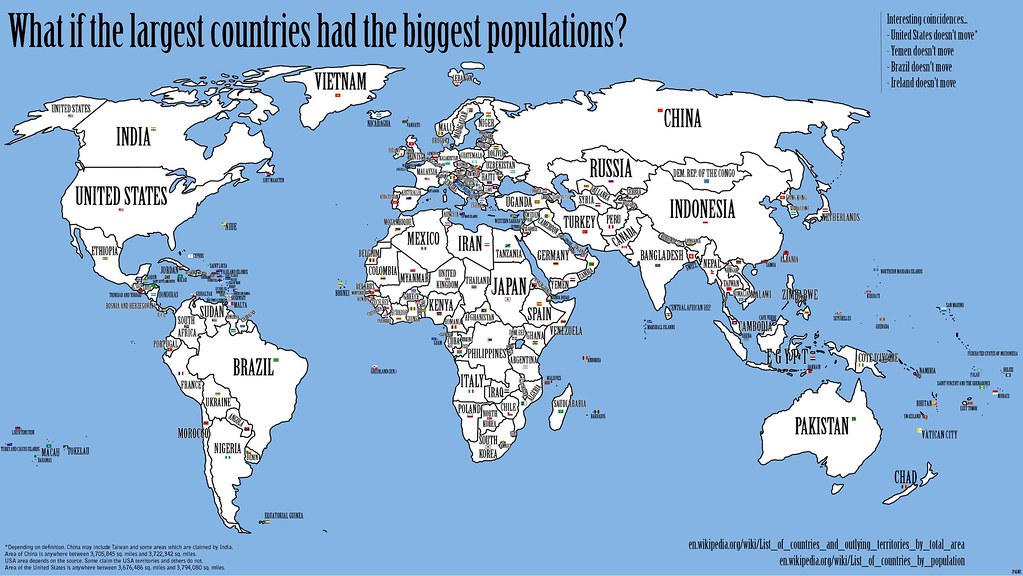
I'm not really sure what the purpose of this is; since low-population density countries are that way primarily because they can't support a larger population. So it's useless, but still pretty cool for some reason.
Actually maybe some countries haven't capitalized on climate change, or they are capable of supporting a larger population, but get greater returns from having fewer people with lots of land.
Saturday, October 9, 2010
Narrative Therapy
This is great! I was considering becoming an author so that I could work out my issues by writing unbearable fiction and turgid novels, but this is much faster:
http://evolvingthoughts.net/2010/10/08/my-life-as-a-book/
I appear to have skipped ahead to the 'past my prime and tweeting about it' stage already.
There might be a few problems with writing my autobiography at such an early stage (while complete fabrication may be commonplace -- you still need something to start from.)
Blurb: (it doesn't matter what is here -- same thing goes for all of the recommendations on the back cover from the worst writers in your generation.)
Preface: I'm going to have some difficulty with this part as most of the authors that I admire have passed on, are no more, have ceased to be, or have expired and gone to meet their maker.......
Introduction: I was born in an ordinary hospital, on an ordinary day, to ordinary parents, who would have guessed that from such a prosaic entrance into the world..............
Chapter 1: An account of a normal boring childhood that I successfully manage to represent as traumatic.
Chapter 2: In which I overcame the disadvantages of being raised an educated WASP in a WEIRD country, attended Berkley (and annoyed the heck out of every possible non-libertarian there -- in the hopes that their humorous reminicing gets on the special features DVD of the movie that they made from my autobiography.)
Chapter 3: I make my millions selling dog-tracking software, and then spend my leisure time winning Nobel prizes, and confirming the Riemman Hypothesis.
Chapter 4: After becoming famous enough to be persecuted by an opposing religious or political sect, I wrote a book about that.
Chapter 5: Climbed Everest and wrote another book.
Chapter 6: Where I do something unbelievably stupid, and my ashes are sent into space just to annoy Robin Hanson and my bio is finished by my AI named SAM, who also was the ghostwriter for my book about Everest.
Subscribe to:
Posts (Atom)